
Stop Being the Bottleneck for Every Decision in Your Business

You record it. We transform it into everything else.
Send us a recording and get your own delivery page back: a fully edited episode, clips, captions, and show notes, all on one central page your team publishes from.
Get this for your podcast

You offer someone $65,000. Your books will feel $95,000.
Wage, overtime, benefits, paid time off, the software seat, the phone, the truck. Then add the part most owners leave out. Managing that person eats a slice of your own week, and it comes straight out of the capacity you were trying to buy.
Price the whole thing before you make the offer, then name the margin that person has to generate to be worth it. Without that number, the hire is a guess.
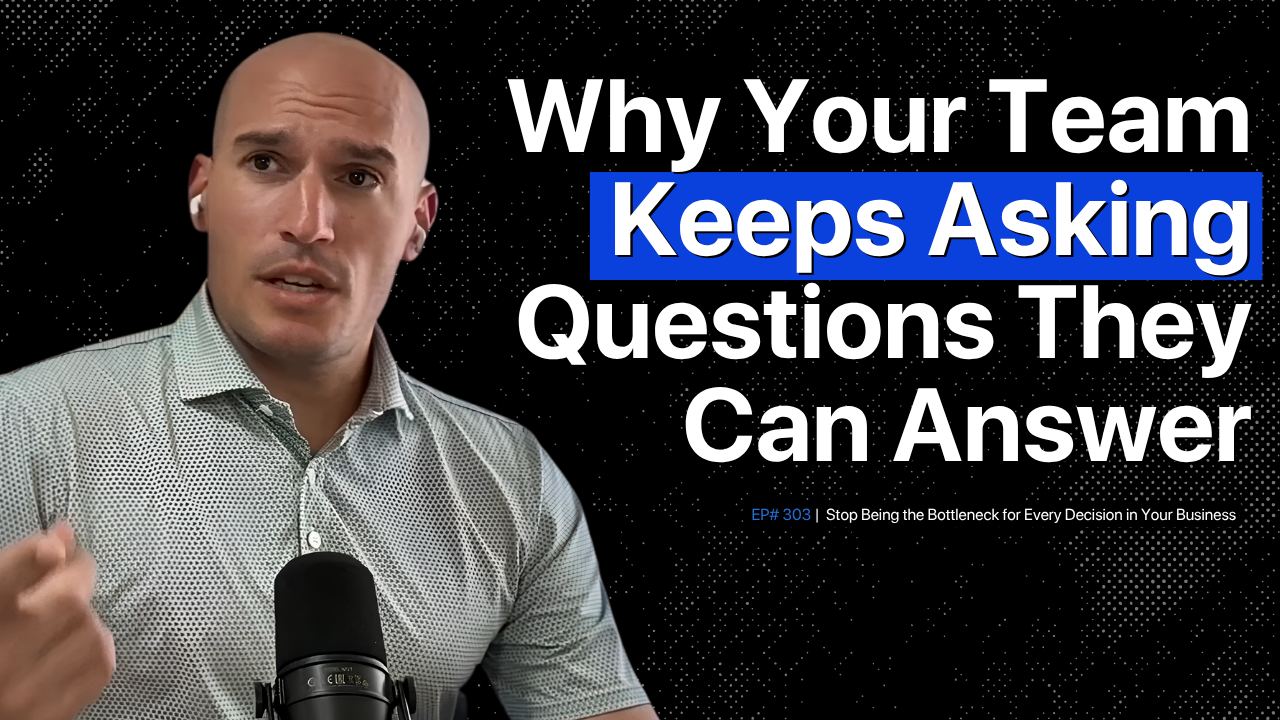
A lot of the questions your team brings you, they already know the answer to.
They ask anyway because your answer moves the risk. Once you've told them what to do, whatever happens next isn't on them. That trade works for everybody except you.
Answer with a question instead. What does the manual say? What does your job description say? Do that consistently and the questions thin out, because the risk stops transferring.
You can't be their relief valve and get your week back at the same time.

If you work the most hours and get paid the least, look at your prices before you look at your calendar.
Delegation costs money before it saves you time. You pay for the training, you pay through the hires that don't work out, and you carry the salary while the new person is still slow. Martin calls it a capital investment, and capital investments need funding.
At a lot of owners' current prices, there's nothing to fund it with. Raise them, pull overhead back down, and the person who takes work off your plate becomes affordable.
Once it's paid for, the machine starts to run.
Ready-to-post clips without anybody on your team touching an editor.
Each clip has a caption and YouTube description ready to copy, paste, and post.
Get your own delivery page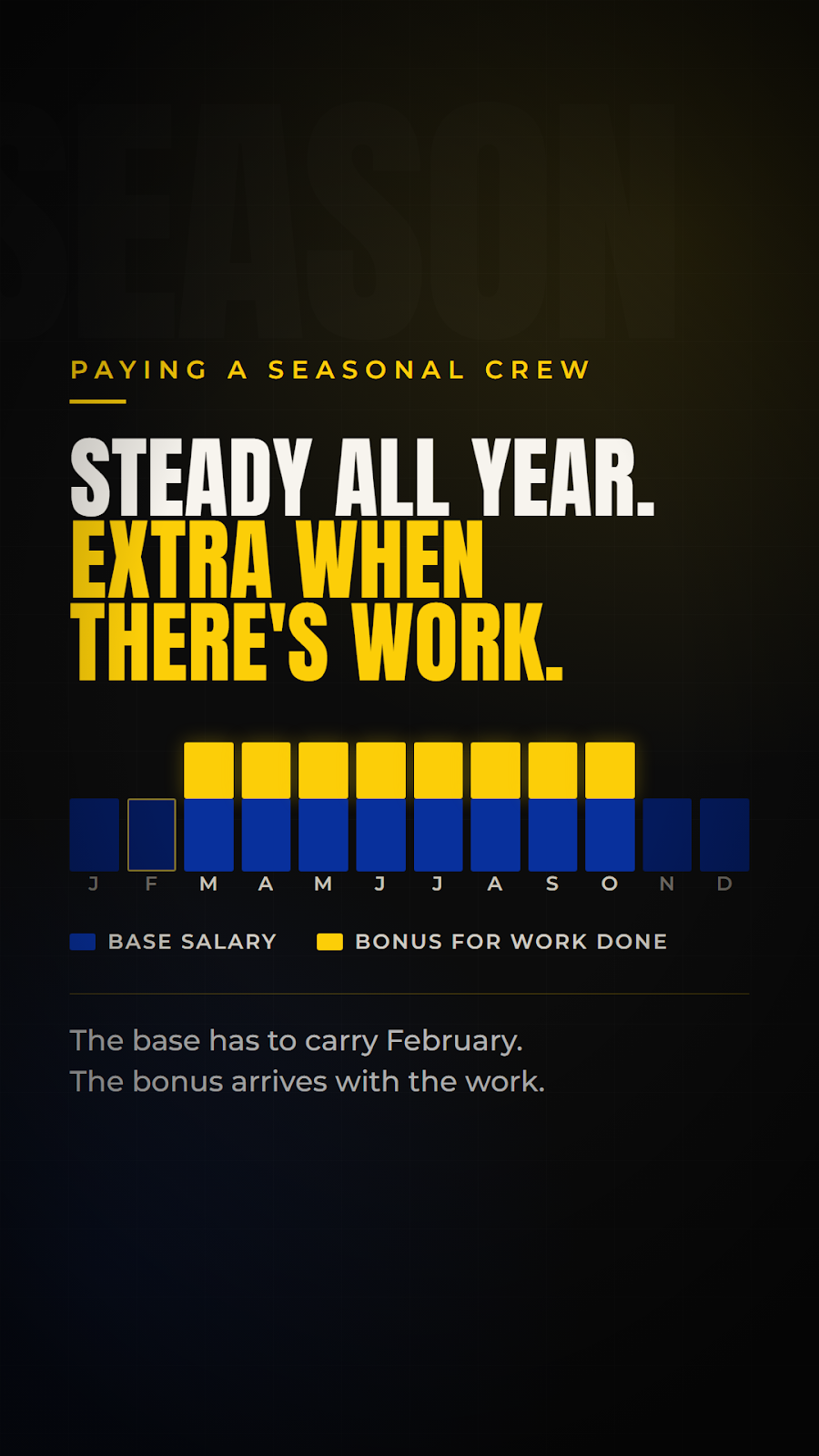
Seasonal crews make pay hard. Busy most of the year, quiet for the rest, and the paycheck has to work in both.
Set a base that's honest rather than exciting, low enough that it could carry someone through February if it had to. Put the upside in a bonus tied to work done.
Say the base out loud when you hire. Then February pay looks like February, and nobody is surprised.
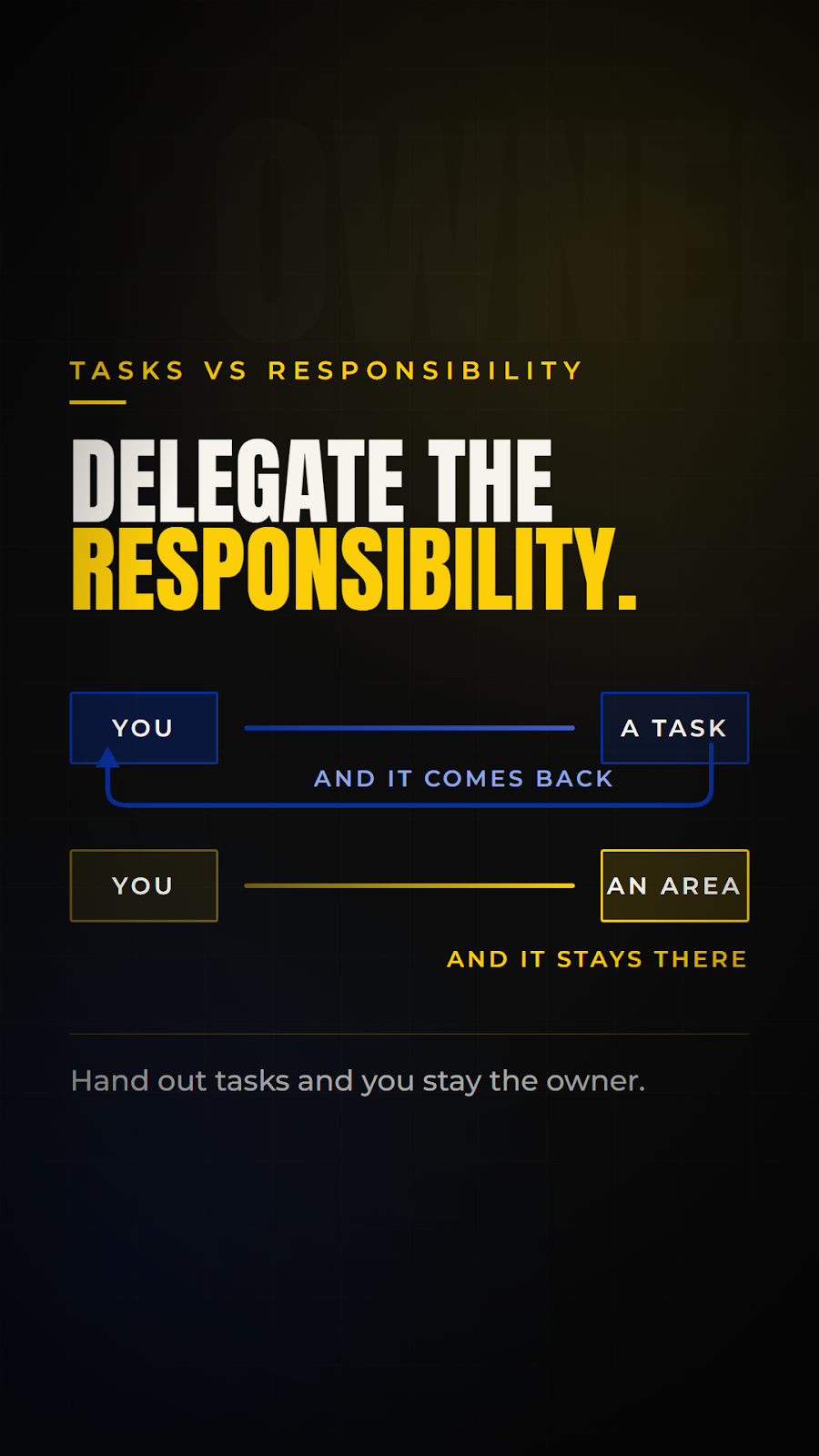
Handing off tasks won't get your hours back. The responsibility lands right back on you, and so do the questions.
Give away the whole area instead. Own two or three, and put someone else's name on everything else.

Pricing a thing is easy. There's a receipt in the bag.
Pricing a person is harder, because what you're buying is capacity, the ability to do more without your fixed costs moving. Add up wage, overtime, benefits, and paid time off, then hold that number against the margin the capacity should produce.
Do both, or you're guessing at whether the hire pays for itself.
How much of your week disappears into questions other people could already answer? If nothing moves until you weigh in, the business runs at your speed and no faster. Martin and Khalil work through three questions listeners sent in: what a new hire actually costs before they generate a dollar, how an owner stops being the dumping ground for every decision, and whether it's normal that the owner works the most hours. The answers keep landing in the same place. Most owners delegate the task and keep the responsibility. If you're trying to buy back your week without anything hitting the floor, this one's worth your drive home. The owners who fix it stop carrying the whole business in their head.
- How to build an all-in cost for a hire, and why a $65,000 salary can land near $95,000
- Why managing a new person eats the capacity you were buying
- How to set the margin a sales hire has to generate before you sign the offer
- How to pay a seasonal crew without losing them in the off-season
- When outsourced HR or bookkeeping should finally come in-house
- Why handing over an area works when handing over a task doesn't
“Delegation is a capital investment. It costs you now in time, effort, training. Once it's paid, the machine just starts to run.”
— Martin“You've gotta be able to delegate responsibility and not just tasks.”
— Khalil“As long as you're willing to answer the questions, they're never gonna ever quit asking.”
— Martin“There are too many businesses, small businesses out there where the owner works the most and gets paid the least.”
— Khalil“You can't be their relief valve.”
— Martin- Build the all-in number before you make the offer. Wage and overtime are just the start, and benefits, paid time off, software, and equipment push a $65,000 salary close to $95,000. The offer letter never shows you that.
- Managing a new person eats a slice of your own week, so count that slice before you hire. It comes straight out of the time you were trying to buy, and owners who skip the math wonder why nothing got easier.
- Before you sign a salesperson, name the margin they have to bring in. Martin's rule of thumb is about three times what they cost you all in. Then look hard at whether the territory can actually produce it.
- Answer a question with a question. Point people back to the manual, the job description, or the contract. As long as you keep handing out answers, they'll keep coming to get them.
- Hand over a whole area, with the context behind it, the end state you want, who to call besides you, and when to escalate. Skip any of those and it lands back on your desk.
- Decide which two or three areas genuinely need you, then name someone else as the point person on everything else. They can sit outside the company. You still carry the responsibility, you just stop being the first phone call.
- A lot of owners can't fund help at the prices they're charging today. Fix the pricing first, and hiring the person who gets you out of the truck stops being a someday thing.
Send us one recording.
Four business days later, your team gets a page like this one: every asset labeled and ready to launch.
Get started