
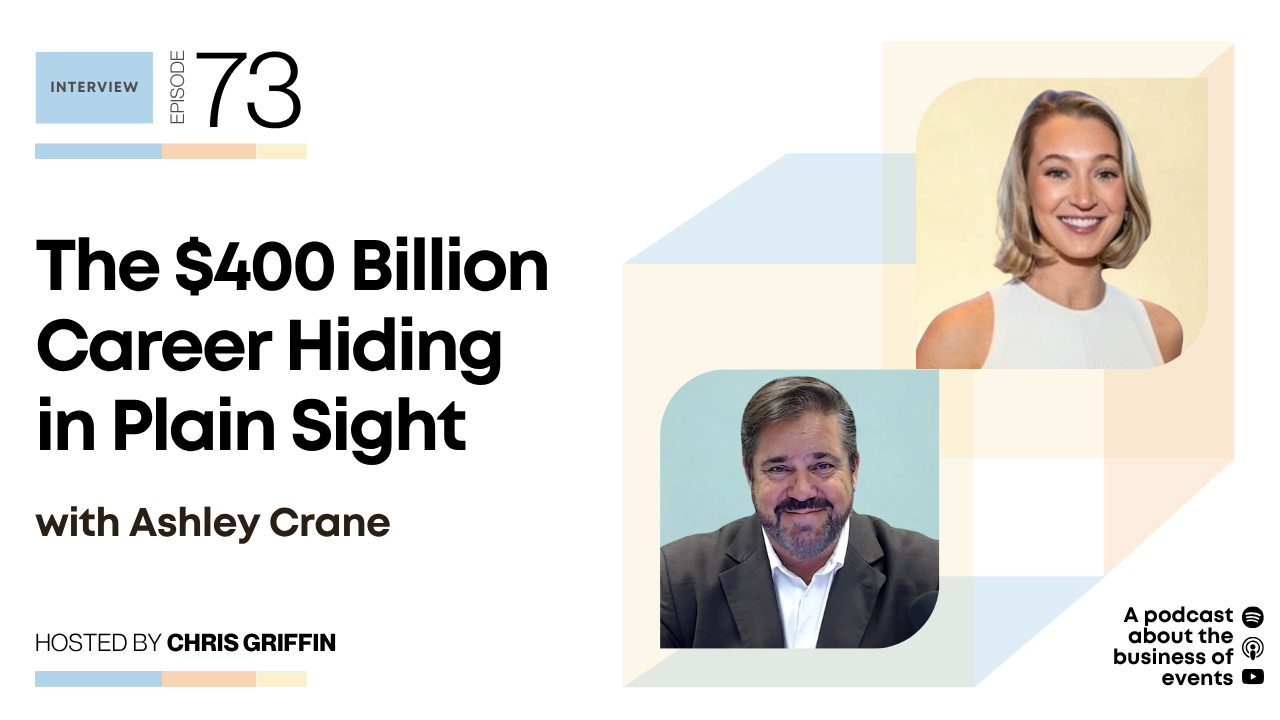
The $400 Billion Career Hiding in Plain Sight with Ashley Crane
You record it. We transform it into everything else.
Send us a recording and get your own delivery page back: a fully edited episode, clips, captions, and show notes, all on one central page your team publishes from.
Get this for your podcast
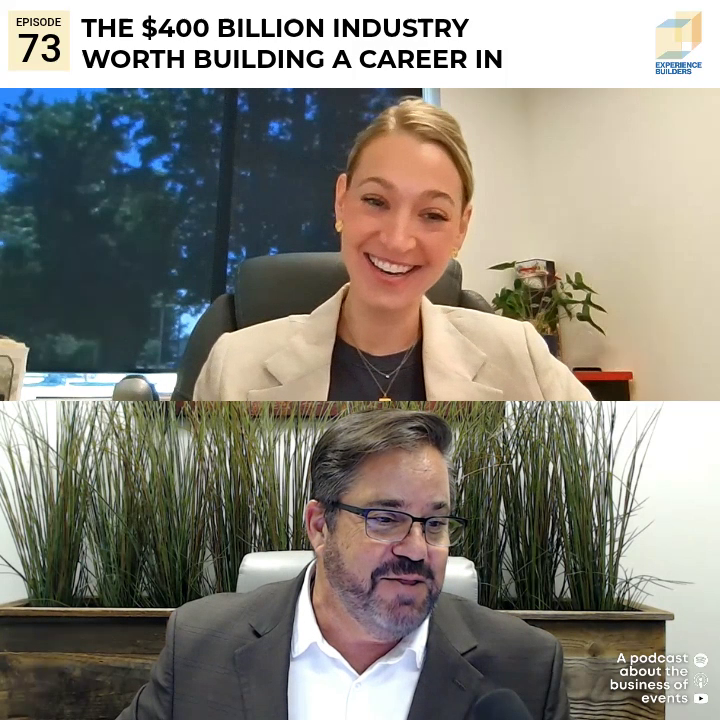
Trade shows quietly move the economy. Business events added $408 billion to the US economy last year, and $168 billion of that came from businesses buying from other businesses after meeting face-to-face on a show floor. Nearly every product on your desk launched at an event first.
Ashley Crane calls it a whole branch of marketing worth discovering. The people who design and build these environments help the world trade, and that's what makes the work feel genuinely meaningful.
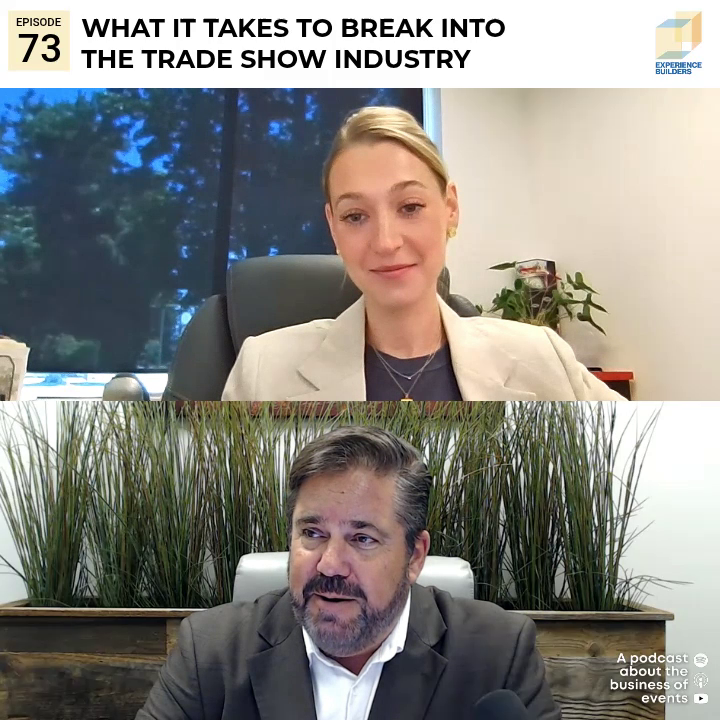
Curious whether the trade show industry is for you? Ashley Crane says there's a place for every working style, whether you like the office, the road, or a mix of both.
What matters more is temperament: patience, problem-solving, positivity, and being team-oriented, because a show opens on schedule no matter what breaks the night before. Her advice on picking an employer is just as practical. Interview the interviewer, ask people who've actually worked there, and match the company size, small, medium, or large, to the way you do your best work.
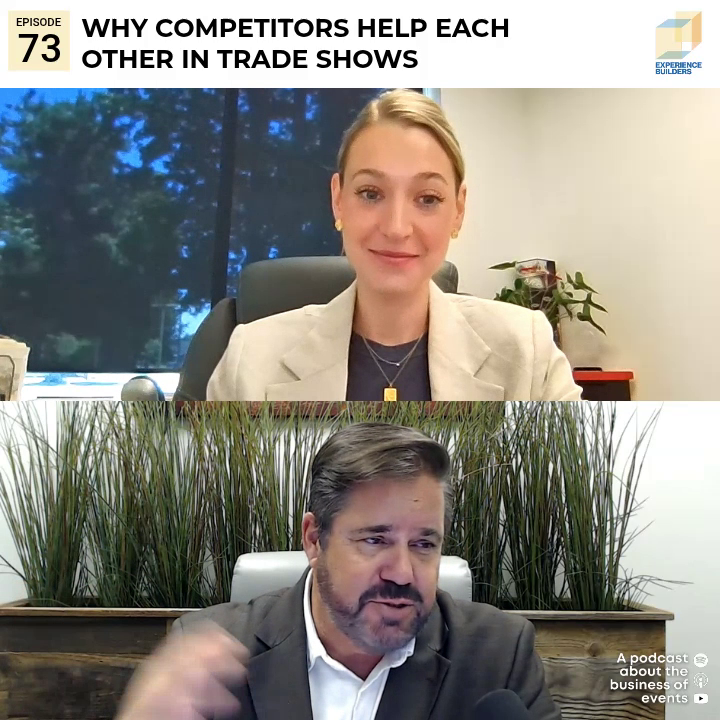
Ashley Crane came from fashion, where brands stay guarded and rarely talk to each other. The trade show industry surprised her.
On the show floor, competitors will hand each other gear and lend a hand without hesitation, because everyone shares one goal: building something beautiful for the client. It's a culture built on relationships, where the people who show up for others get taken care of when they need it most. Have you seen this kind of coopetition in your corner of the industry?
Ready-to-post clips without anybody on your team touching an editor.
Each clip has a caption and YouTube description ready to copy, paste, and post.
Get your own delivery page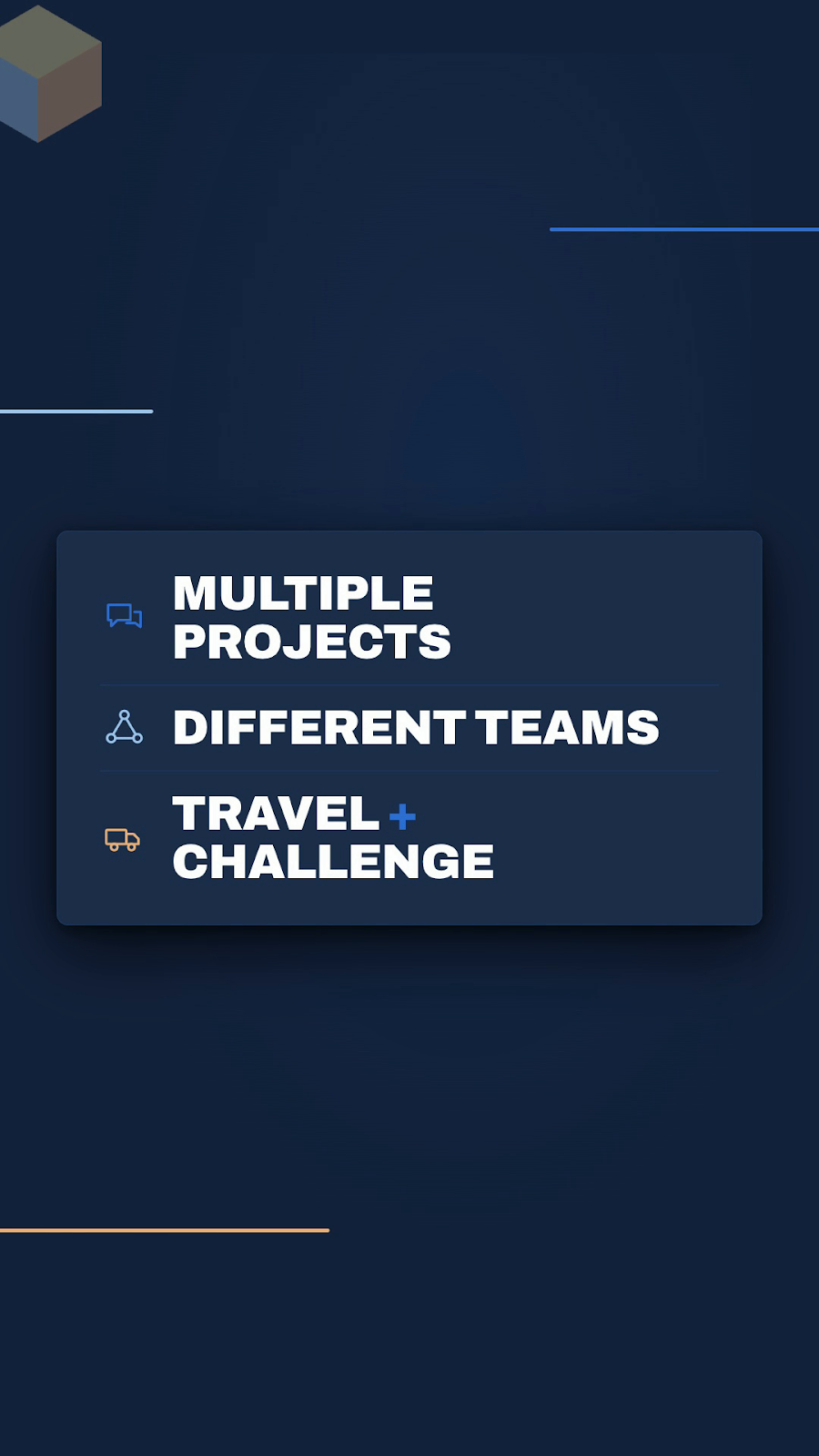
Ashley Crane loved her fashion career in New York and never planned to leave. When her dad asked her to join Acer Exhibits, she looked hard at what she actually enjoys about work: juggling multiple projects, working with different teams, traveling, and taking something from nothing to finished. Every one of those things describes trade show work.
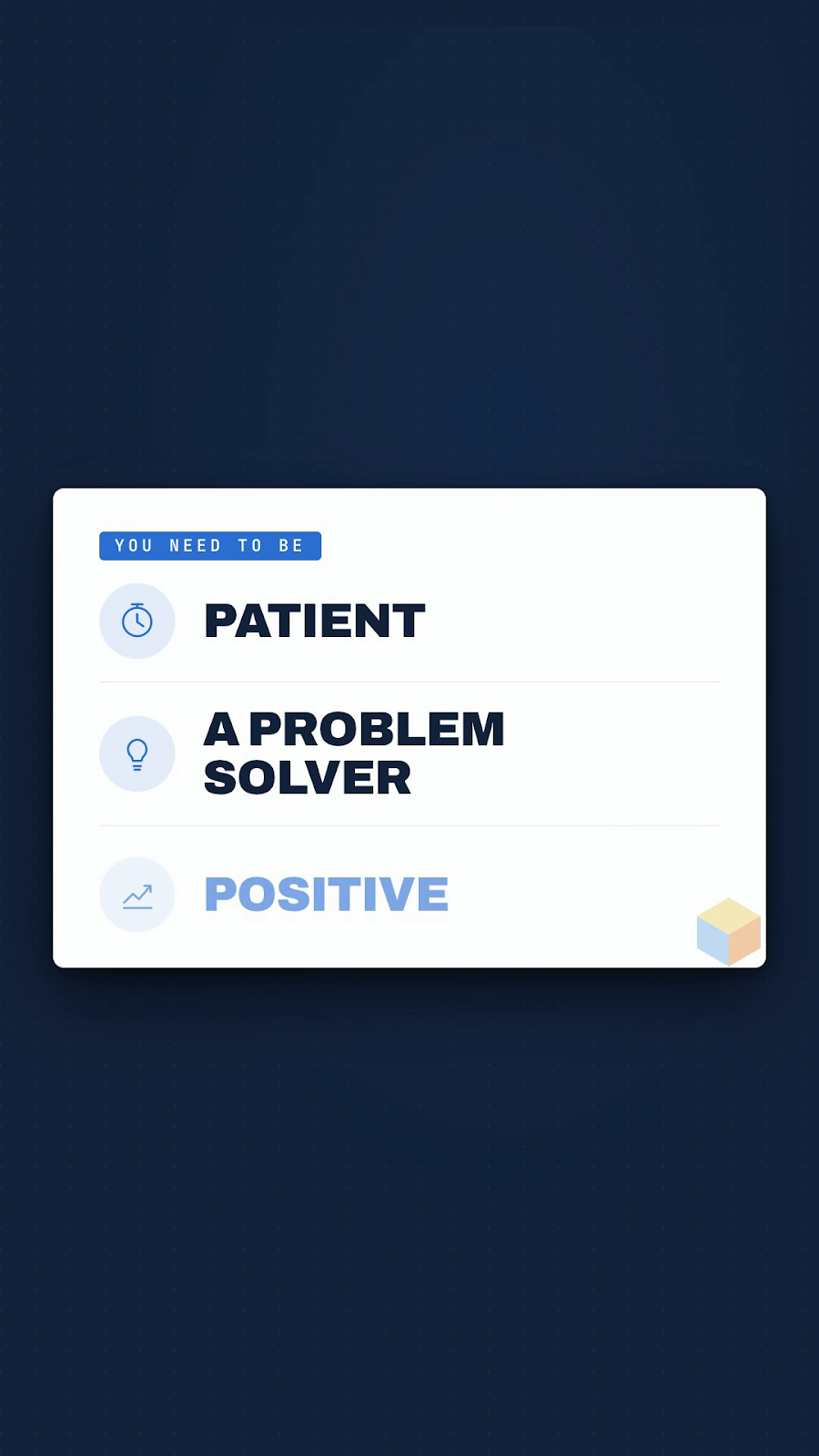
There's room for everyone in events, but a few traits separate the people who thrive. Ashley Crane names patience, problem-solving, and staying positive when things go sideways, plus being genuinely team-oriented, since no one pulls off a show alone. As she puts it, you're in for six months or you're in for life.

Ashley Crane's proudest moment came the night before the L'Oréal Village opened at AAD, standing with her team, looking at everything they'd built, and thinking, we did this. The scale grew from one year to the next, and sharing the photos with teammates back home who couldn't be there made the whole effort worth it.
Trade shows are one of the biggest, most meaningful branches of marketing, and one of the best-kept secrets in the field. Business events add $408 billion to the US economy every year and spark $168 billion in business-to-business purchases, and the people who build them get to say they help the world trade. Chris talks with Ashley Crane, Business Development Manager at Acer Exhibits, who left a fashion career in New York to join the family exhibit house. Part of an industry-wide push to introduce the next generation to careers most people never knew existed, the conversation gets into why the work is so meaningful, the traits it takes to thrive when a show has to open no matter what, and how to choose the right employer. Ashley shares what keeps her in it (the people, above everything) and what surprised her coming from fashion: an industry that runs on relationships, where even competitors lend each other gear on the show floor. If you're curious about experiential marketing or weighing a career change, this conversation opens a door worth walking through.
- Why the trade show industry is one of the largest career fields almost no one is taught about
- The traits that actually predict success when a show has to open no matter what
- How to choose the right employer across small, medium, and large exhibit houses
- Why the industry runs on relationships and even competitors help each other
- How a fashion background can translate into a career in experiential marketing
- What the scale of the industry (2.6 million people, six-figure income) really looks like
“There's a whole other branch of marketing that exists that they're not teaching us.”
— Ashley“This is one of the few industries, we don't get rain delays.”
— Chris“At the end of the day, we all have one objective, and it's to build something beautiful for our clients.”
— Ashley“You absolutely can make a six-figure income and support your family.”
— Chris“No one achieves anything alone.”
— Ashley“You can't be afraid to go up and talk to people in this industry.”
— Ashley- Trade shows are one of the largest and most meaningful career fields out there. Business events contribute $408 billion to the US economy each year and drive $168 billion in B2B purchases, and the people who build them get to help the world trade.
- The opportunity is wide open. The industry is actively working to introduce the next generation to these careers, and it needs creative, strategic, and operations talent alongside skilled trades. Around 2.6 million people already work across 10,000-plus events a year, and a six-figure income is realistic.
- Ask why people stay and the answer is the people. Between office teams, show-floor crews, and industry groups like EDPA and Women Experiential, the relationships are what make the work intoxicating.
- There's a role for every working style. Whether you prefer the office, the road, or a mix of both, the industry has a place for you. What predicts success is temperament: patience, problem-solving, positivity, and being team-oriented.
- Events don't get rain delays. A show opens on schedule no matter what breaks or changes at the last minute, so staying calm and solving problems on the fly is the core skill the work demands.
- Match the employer to how you work. Interview the interviewer, ask around the industry for honest opinions, and choose the company size, small, medium, or large, where you'll do your best work.
- The industry runs on relationships, not rivalry. Competitors help each other on the show floor because everyone shares one goal: building something great for the client. The people who show up for others get taken care of when they need a lifeline.
Send us one recording.
Four business days later, your team gets a page like this one: every asset labeled and ready to launch.
Get started