
Philosophy, Principles, and Policy: How to Roll AI Out to Your Team
You record it. We transform it into everything else.
Send us a recording and get your own delivery page back: a fully edited episode, clips, captions, and show notes, all on one central page your team publishes from.
Get this for your podcast

Khalil and Nick spent the start of the year on the phone working through what AI meant for their careers, somewhere in the five stages of grief.
Your team may be riding that same wave, doom and gloom on one side, "this is nothing" on the other.
Lead that conversation and shape the narrative yourself, or the division shows up right when adoption starts.

The cost of building your own tools dropped. The cost of owning them did not.
Nick keeps seeing people ship a website, an app, or an elaborate spreadsheet without pricing in the maintenance. A tweet he points to nails it: free as in a puppy, not free as in a beer.
Give a salesperson a CRM they built themselves and you now have a part-time maintainer who is selling less. Budget the maintenance, or the work people were hired to do quietly stops happening.

Someone builds a skill, tells the team it works great, and everyone starts running it. Nobody knows it writes fifteen files to SharePoint on every run.
Khalil's principle is to work through something manually before you automate it. Nick pushes on the framing: the real gap is work spreading through a company before anyone has decided it's ready to be shared.
An automation nobody ran manually is a process nobody understands. Work through it by hand first, then share it.

Six months ago, a 2X productivity gain sounded incredible. Now 2X isn't enough, and everyone chasing 10X went over their skis.
Khalil's counter is to point the team at quality. Ask what AI can make better, and speed shows up as a byproduct.
Nick has tried the hundred-agents version of fast himself, and it always failed. Walk, then run: get to 2X, hold quality where it was or better, then reach for more.
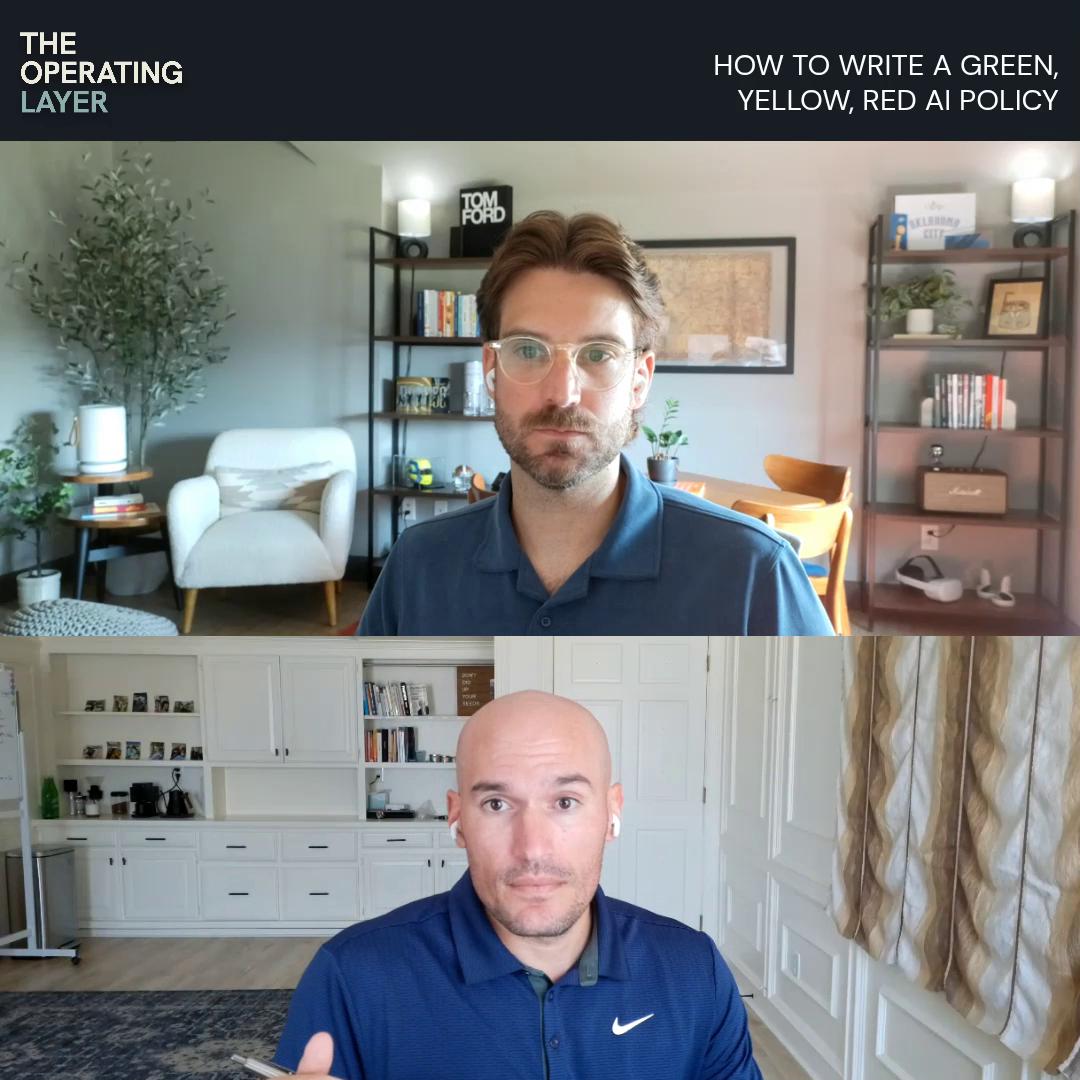
An AI policy your team can actually follow fits in three columns. Green, yellow, red.
Green is what anyone can do any time, spelled out clearly enough that people actually do it. Yellow is proceed with caution: Khalil's own agency puts AI-assisted client work there, with two reviewers signing off before anything ships.
Red is for the never list. Nick's first entry: sending work you haven't read.
What would your red column say?
Ready-to-post clips without anybody on your team touching an editor.
Each clip has a caption and YouTube description ready to copy, paste, and post.
Get your own delivery page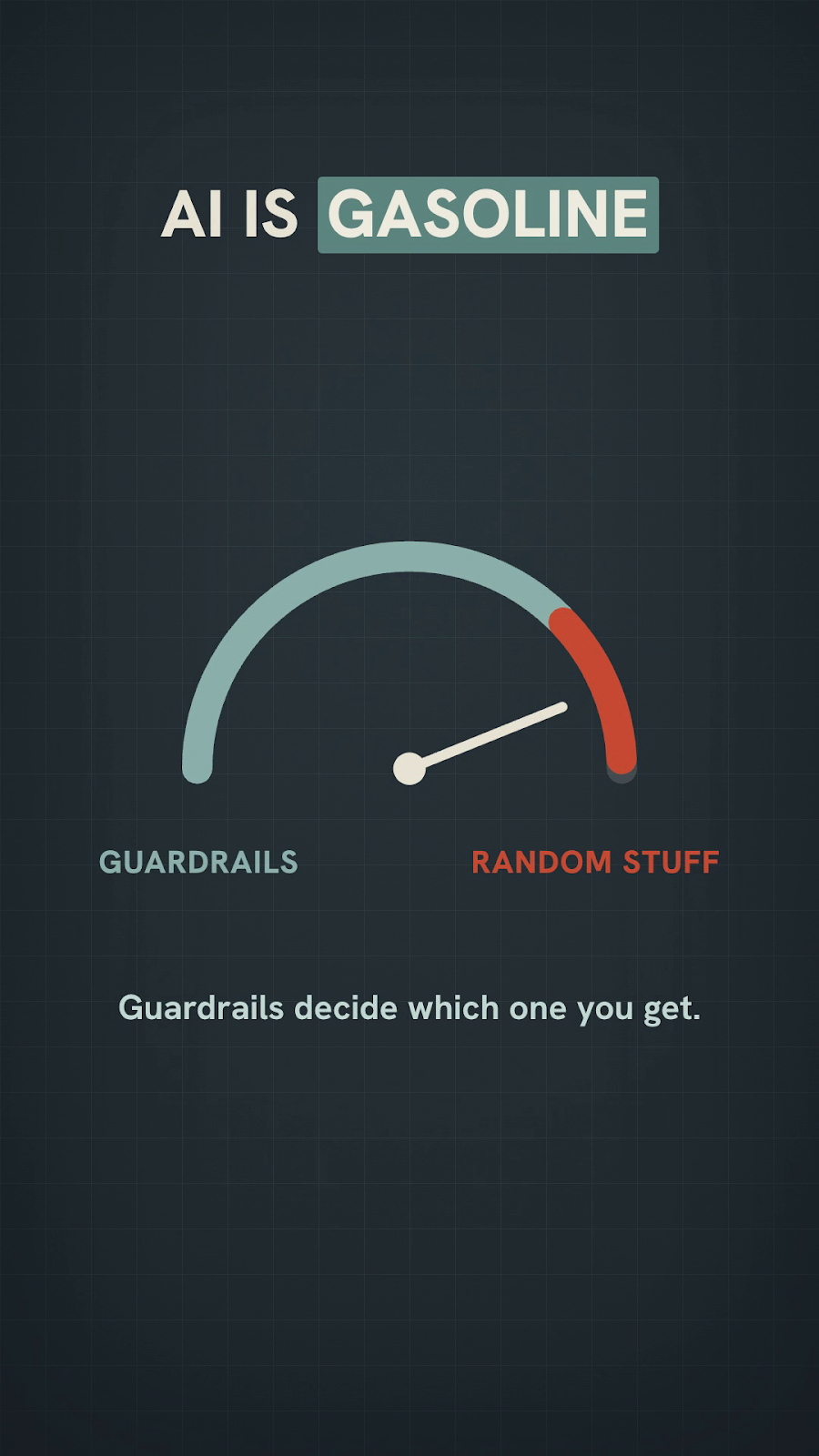
Put gasoline in an engine and it does something very different from pouring it on a pile of wood and lighting a match.
Khalil's point is that AI lands the same way. Drop it into a mapped operation with clear connections and real guardrails and it is extremely powerful. Throw it at random work and it blows things up.
Carry the tin carefully.
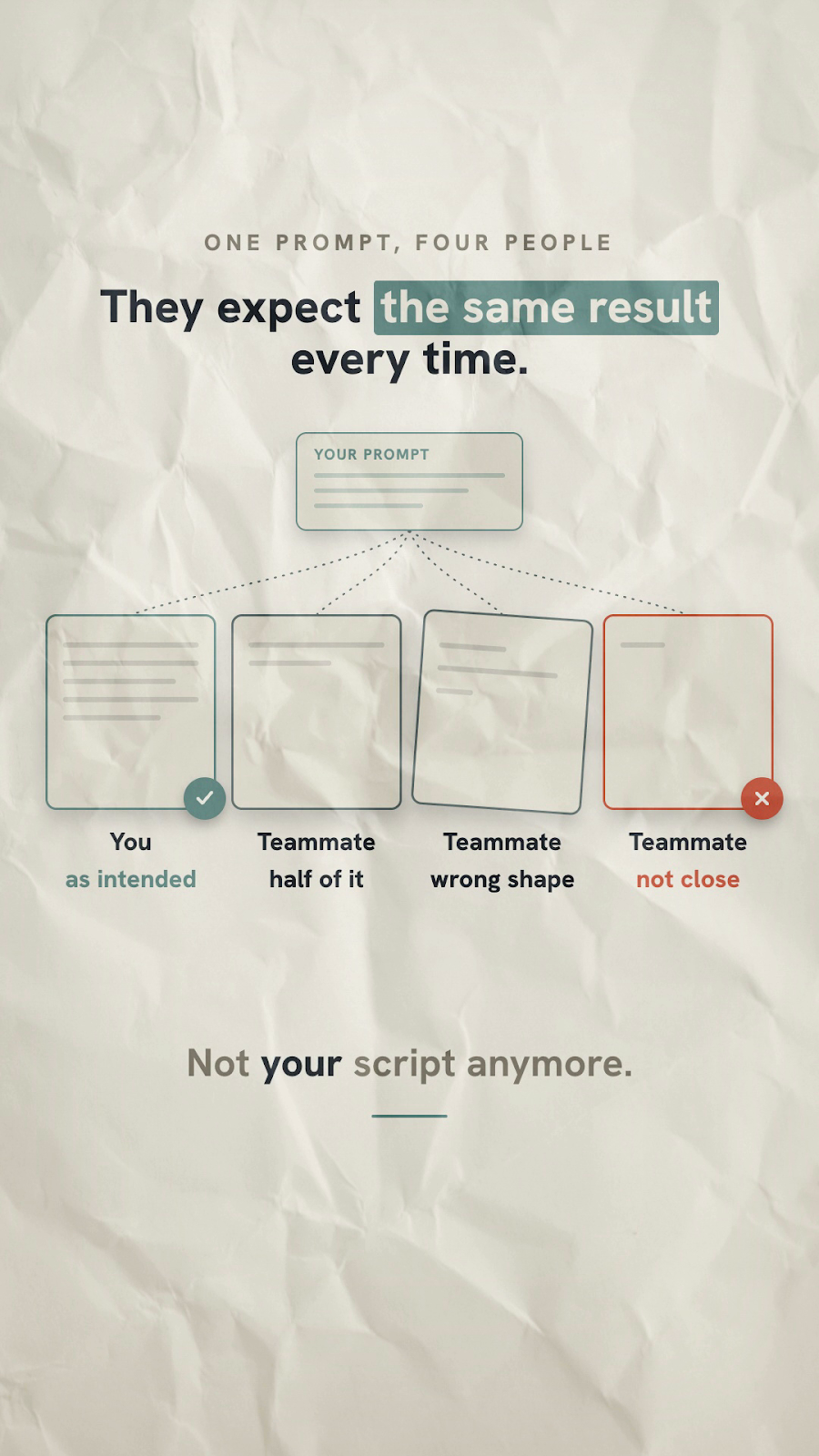
A skill you built for yourself is fine when it breaks, because you know what it does and you can fix it.
Nick's warning is what happens the moment you hand it to a teammate. They expect it to work like an application: click the button, same result every time, nothing to worry about.
Sharing is the step that needs a decision, starting with who maintains it when it breaks.

A six-page document lands in your inbox and takes half an hour to decode. AI wrote it well, just not for you.
Khalil's principle is that sending something is your stamp of approval. You spent the session going back and forth with the AI, so the output makes sense to you. The person receiving it never had any of that context.
Read it before you send it. Otherwise you're asking the other person to do the reading you skipped.
Most AI rollouts stop at giving people an account and assuming they'll figure it out. We've watched that fail across enough companies to name what's missing: philosophy, principles, and policy, in that order. Philosophy is the mindset you set first, and ours is steady: for most companies the core business is mostly unchanged, and humans still create the value through judgment, decisions, and service rather than keystrokes. From there we work down: six principles we use ourselves, then policy, where we lay out a green, yellow, red framework you can take into your next team meeting and start filling in.
- The mindset to set before you roll AI out to anyone
- Six principles Khalil and Nick use themselves
- How to write a green, yellow, red AI policy
- Why AI behaves like gasoline in your operation
“You want to lead that conversation, shape the narrative of everyone on your team or else there's going to be division.”
— Khalil“You have to be careful with the gasoline.”
— Khalil“You can't own what you don't understand.”
— Nick“You can't outsource your understanding to AI, and you can't outsource your judgment to AI.”
— Khalil“When you send something, you are signing off on it.”
— Khalil- The order that works: philosophy, then principles, then policy. Philosophy is the mindset, principles are the overarching themes, and policies are the specific rules underneath them.
- Your team may land on the extremes unless you lead the conversation. Some expect to be replaced, others call it a fad. Shaping that narrative yourself keeps the rollout from splitting the company.
- Six principles we use: know the real cost of building, you sign what you send, manual before automated, you can't own what you don't understand, use AI and don't build with it, and quality over speed.
- Maintenance is the cost nobody prices in. Building got cheap and owning did not, so a salesperson with a weekend-built CRM is now a part-time maintainer who sells less.
- Write the policy as a green, yellow, red list. Green needs no approval, yellow needs review, red is off limits. Keep it living, revisit it in team meetings, and bring the team in so it reads as adoption rather than replacement.
Send us one recording.
Four business days later, your team gets a page like this one: every asset labeled and ready to launch.
Get started