
Managing AI Context: What It Is and Why It Decides Your Results

When most people start with AI, they think context is whatever they type into the chat, plus the memory feature that quietly saves a profile about them.
Khalil and Nick make the case that context runs much deeper.
At the company level, context is everything the AI can reach: your files, your recorded meetings, your Slack threads, the systems you've given it access to. Memory is the profile it keeps about you.
Context is the specific information it pulls in to do a task. Getting that distinction right is where genuinely useful AI starts.

Every AI session keeps a kind of working memory, the context window, holding the files, customers, and steps it needs for the task in front of it. That window has a ceiling. As it fills up, the AI gets less sharp, and most conversational chat tools won't even show you how full it is.
Nick frames AI as a tool you learn to use well, and managing the context window is the skill that separates people getting real work done from people stuck inside a single chat. For serious operations, you need tools built to manage it.

Software teams got value from AI fast partly because every coding project already keeps its context in one place, so anyone (or any agent) can open it and know what's going on.
Khalil applies the same idea to regular knowledge work. He sets up each piece of work as a project with a brief that explains the goal, a status file that tracks where things stand, and a plan broken into phases.
Start a new session and the agent knows exactly where to pick up. Hand it to a teammate and their agent does too.
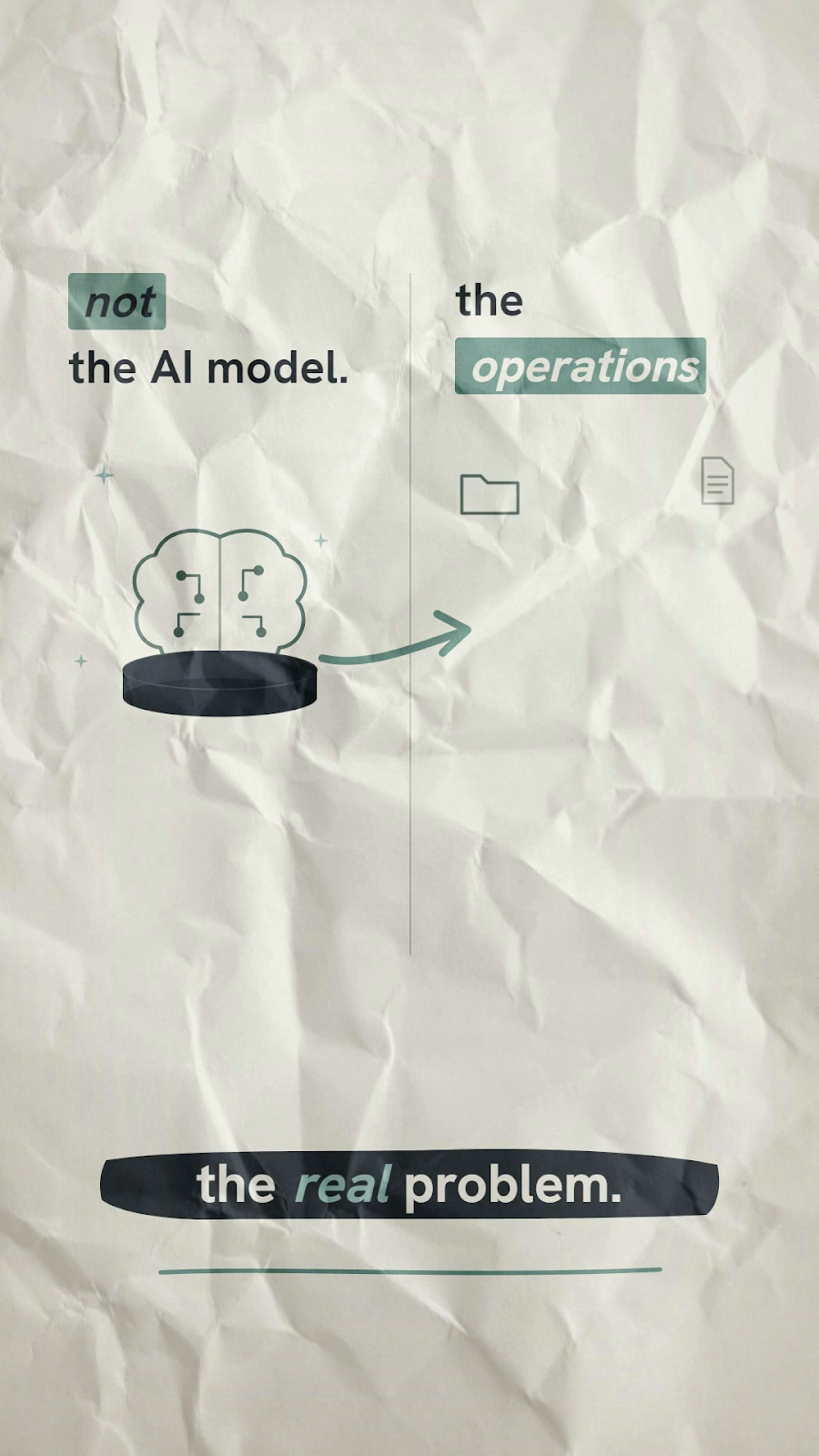
What decides whether AI works is the operation underneath it, and most companies never gave their people a map of where files live. Add AI on top and, in Khalil's words, it becomes gasoline: more files, worse map, bigger mess.
Put that structure in place first, and everything you build on top of it gets sharper.
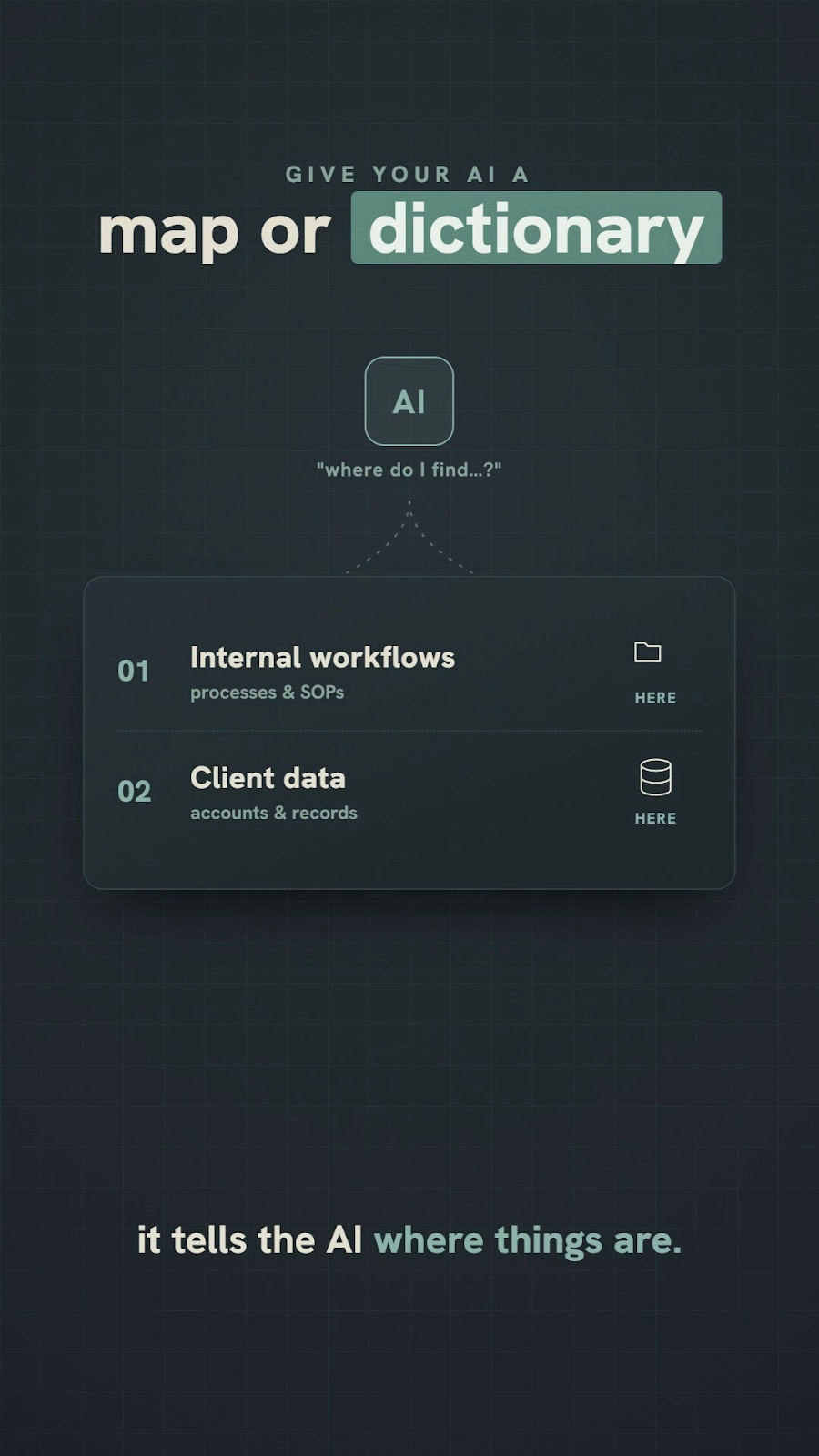
You wouldn't hand a new employee a computer and say go find everything. You'd tell them where the workflows live, where client data lives, where to look. Nick calls this a context map, and it's the main lever we have for scoping AI right now: point it to the right places instead of dumping everything at once.
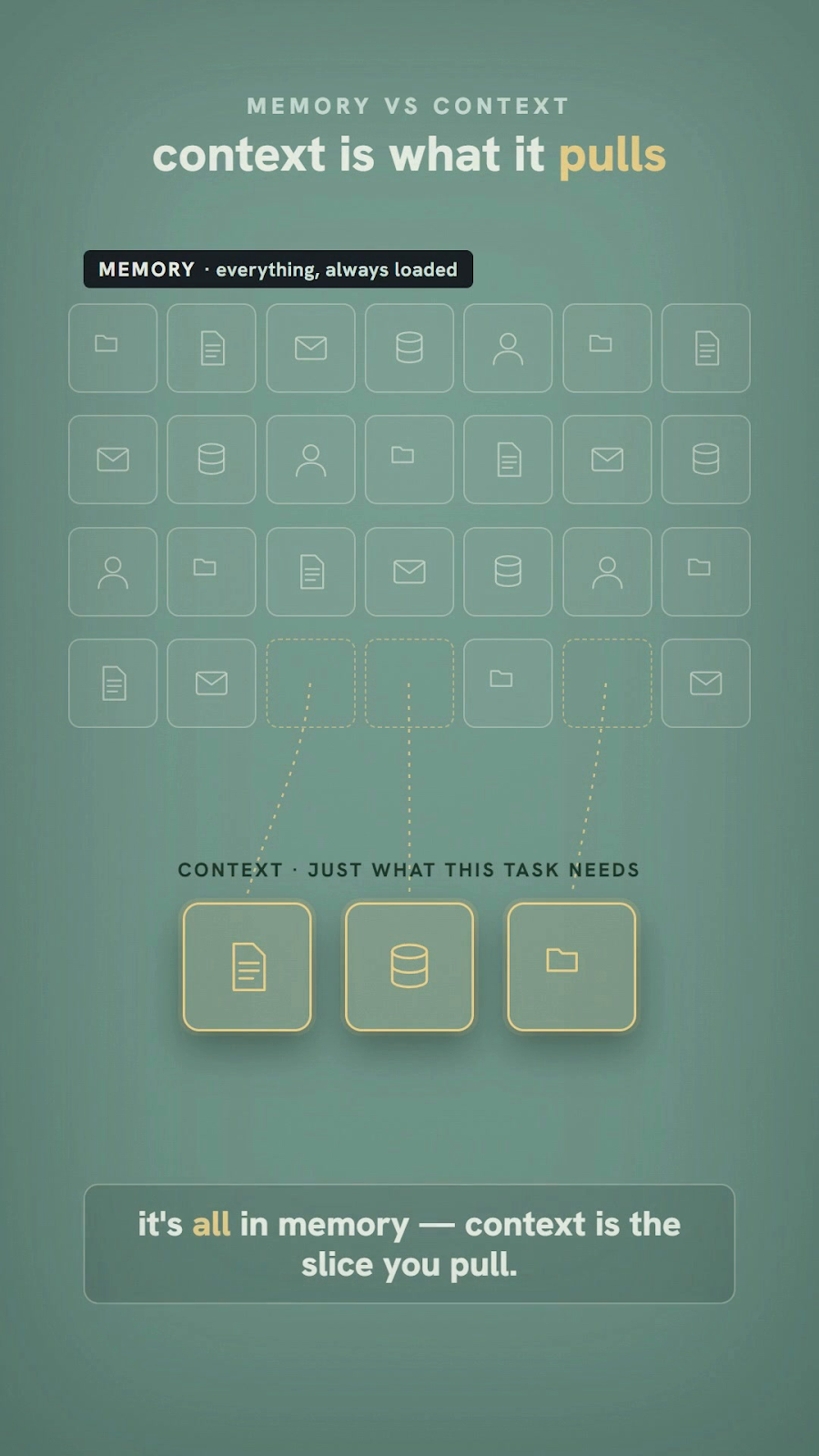
Memory and context get used interchangeably, but they work differently.
Memory is innate and always there, and it can bloat until it's hard to focus. Context is grabbing what you need as you go, like looking up a process on the wiki, using it, then looking it up again next time.
Knowing the difference changes how you feed AI.
AI transformed software teams almost overnight, then kept stalling on everyone else's work. In the first episode of The Operating Layer, Khalil and Nick dig into why. A newer model won't fix it: the answer is context. They start where most people do, with the AI you type into and the memory feature that quietly builds a profile about you, then show how much deeper context actually runs inside a company. From there they get practical: scoping context so the AI only pulls what it needs, drawing context maps that tell it where information lives, and managing the context window that every AI session fills up as it works. Whether you're just past the chat window or making AI a durable part of how your team runs, this episode lays the groundwork for the whole show. Start with context, because nothing else you do with AI holds up without it.
- What context actually is, and why it's broader than the AI's memory feature
- The difference between memory and context, and why it changes your results
- How to scope context with a context map instead of dumping everything on the AI
- Why every AI session has a context window, and how to manage it as it fills up
- How to set up work as a project so you and your team never start from scratch
“Context matters. It's going to drastically change the outputs you get with AI.”
— Khalil“Using AI is also like using a tool, and managing your context window is a key skill in learning to use that tool effectively.”
— Nick“Memory is something that's innate, it's always there to some extent. Context is more of a grab what you need as you go.”
— Nick“You can outsource the thinking aspect to AI, but you can't outsource the understanding.”
— Khalil- Context is everything an AI can draw on: what you put in the session, plus the files, meetings, messages, and systems you've given it access to. Managing it is what makes AI useful in real operations.
- Memory and context aren't the same. Memory is the profile the AI keeps about you; context is the specific information it pulls in to handle the task at hand.
- Most companies never gave people a map of where information lives, and AI makes that gap louder. Put that structure in place first, or AI just multiplies the mess.
- Every AI session has a context window with a ceiling. As it fills up the AI gets less effective, so managing that window is a core operating skill.
- Company context comes in tiers: active (changes constantly), stable (your templates and offerings, kept current and portable), and durable (rarely changes). Updating the stable tier deserves a real sign-off so bad information doesn't spread across the team.